Perfect Or Not, Here I Come!
You don't need perfect circumstances to create the life you envision. Through emotional wealth, personal growth and the willingness to begin with what you have, you can become the person capable of building, managing and enjoying the life you truly want.

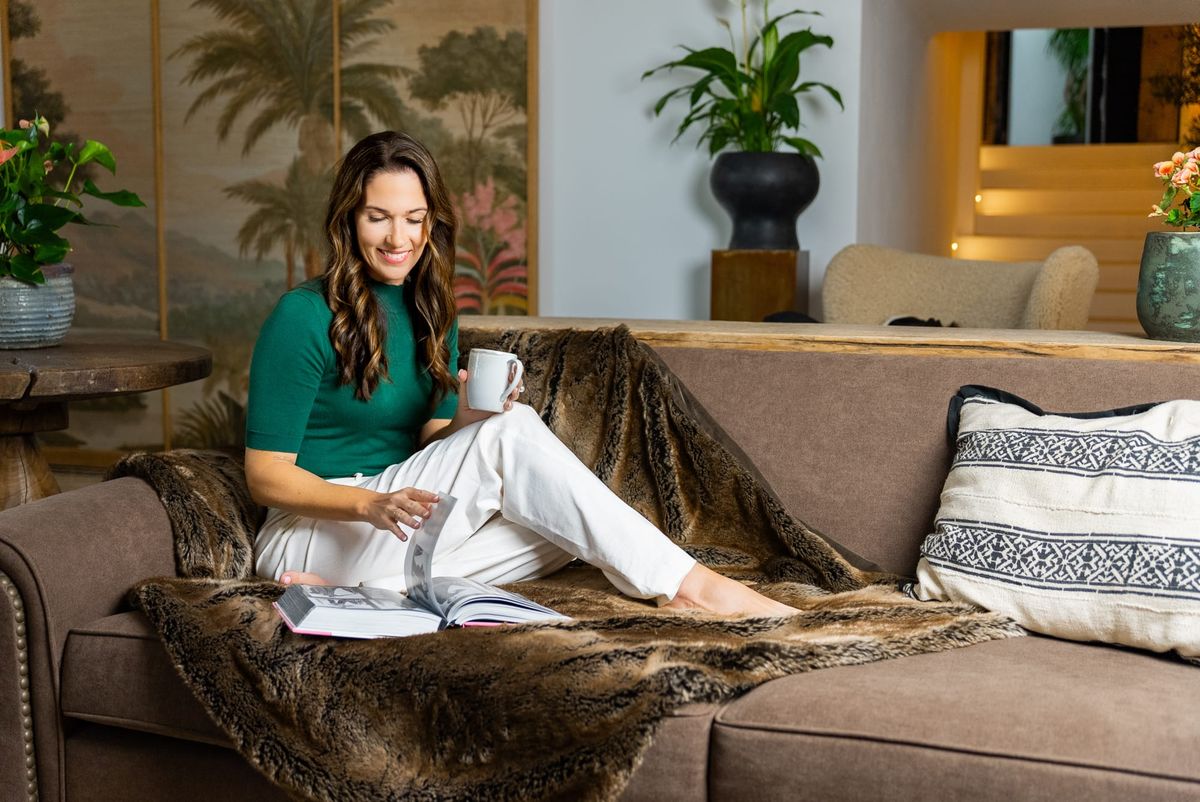
The life you envision requires more than a vision. It requires you to become the person who can create it, manage it and live it well.
I've come to understand that building the life you want has very little to do with waiting for the perfect moment. It has far more to do with developing the emotional capacity to work with the circumstances you have, make decisions that support your future and grow into the person capable of creating what you envision.
For me, this is the essence of emotional wealth. It's the ability to separate how you feel from what is actually possible, to recognise when your current perspective is limiting your next move and to make considered decisions without needing everything around you to feel comfortable first.
When I look back at the beginnings of my business, I can see plenty of reasons why the timing didn't seem perfect. I had a three-month-old and a three-year-old, very little money and an entirely new industry to learn. I didn't have the marketing skills, branding experience or knowledge I thought I needed to build something successful.
There were plenty of reasons to wait. I could have waited until the children were older, my finances were more comfortable (although that was never going to happen if I stayed as I was) or I had developed the experience I believed would make the process easier.
Instead, I began with what I had. In hindsight, that was all I needed to get started.
I could see something worth building, and I was willing to learn what it would take to create it. What I didn't fully appreciate at the time was that the business would require me to develop far more than commercial skills. It would ask me to become resourceful, manage uncertainty, navigate other people's opinions and learn how to hold a vision for my future without needing my present circumstances to validate it. And the quicker I learned, the quicker my vision would come.
The business would become a vehicle for redesigning my life, but the person I became along the way would determine how well I could navigate that journey.
Starting a business with two very young boys wasn't what most people would call ideal timing. Motherhood already required an enormous amount of my attention, and building something new required a different kind of focus. There were practical limitations, unpredictable days and responsibilities that didn't disappear simply because I had a vision for my future.
Yet I was on maternity leave.
I had an opportunity to build a business without also having to be physically present in an office. What initially looked like a challenging season offered a window of possibility. I could use the time available to me to learn, develop new skills and create something that could eventually give me more choice over how I lived and worked.
The circumstances weren't perfect. The opportunity was real.
Recognising that opportunity required me to look beyond what was missing and consider what was available. I couldn't make my children older, manufacture more hours in the day or suddenly acquire years of experience. I could, however, decide what to do with the time I had, the resources available to me and the support I could access.
We often approach the life we want as though the right circumstances must arrive before we can become the person who creates it. We wait for greater confidence before taking responsibility, more money before learning to manage it or more experience before allowing ourselves to think bigger.
Yet many of the qualities we associate with success are developed through the process of pursuing it.
Resourcefulness grows when we learn to work with what we have. Confidence develops as we gain experience and evidence of our own capability. Leadership emerges through the decisions we make, the responsibility we accept and the way we respond when things don't unfold as expected.
We don't need to perfect these qualities before we begin. We need to be willing to develop them.
Starting my business with very little money taught me this in a particularly practical way. Financial pressure has a way of making every decision feel heavier. When resources are limited, there is less room for unnecessary mistakes, and the distance between the life you have and the life you envision can feel particularly apparent.
But that season taught me to become resourceful.
I learned to create, problem-solve and find ways to keep progressing with what was available to me. I learned that progress often came from making the next intuitive decision rather than waiting for a complete solution.
I also had to develop a greater tolerance for other people's opinions.
Not everyone will understand what you're building while it's still taking shape. Some people will measure your decisions against their own beliefs about security, success and what a sensible life should look like. Others may feel uncomfortable when your ambitions begin to extend beyond the expectations they've formed of you.
Learning to distinguish useful feedback from somebody else's discomfort became part of my own development.
This is where emotional wealth becomes particularly valuable. It's not about dismissing criticism, ignoring reality or assuming every decision you make is right. It's about developing the capacity to consider another perspective without automatically allowing it to determine your direction.
When your sense of self depends entirely on external approval, building anything meaningful can become exhausting. Every decision requires reassurance. Every setback becomes a verdict on your ability. Every person who disagrees with you has the potential to interrupt your progress.
When you begin to separate your worth from other people's opinions, you create room to learn without making every experience personal.
You can be a beginner without feeling inadequate. You can make a mistake without deciding you're a failure. You can listen to advice without surrendering your own judgement.
You develop the emotional capacity to remain in the process, even when the process challenges your existing beliefs about yourself.
Stepping out of an analytical industry and into personal and leadership development was another example of how an imperfect beginning can become an opportunity to grow. I didn't arrive with a background in marketing, branding or the language of the industry. I had plenty to learn, and the distance between what I knew and what I wanted to create was considerable.
What I did have was access to detailed online training and support that allowed me to develop those skills from the ground up.
Looking back, I can appreciate something I couldn't have recognised at the time. I wasn't carrying years of established marketing habits or fixed ideas about what my business had to look like. I didn't have a collection of assumptions about what would work, what was possible or how things were supposed to be done.
I was fresh to the process.
That allowed me to approach learning with curiosity rather than defensiveness. I could experiment, ask questions and develop my own understanding without needing to protect an established way of doing things. I had room to be playful, test ideas and remain teachable.
Experience is valuable, but so is the willingness to question what experience has taught us. We can become so attached to the methods that once worked that we are challenged to recognise when a different approach might serve us better.
Being new to something doesn't automatically make you disadvantaged. It simply means you have a different starting point. The opportunity lies in what you choose to do with it.
Over time, I've developed a personal process for working with a vision, and it has become an important part of how I think about emotional wealth and the life I'm creating.
It usually begins as an image in my mind. I can see a possibility, a different way of living or a version of my future that I'd like to experience. That image creates an emotion, and I pay attention to how I feel in response to it.
Sometimes the emotion is excitement, anticipation or a sense of possibility. At other times, the vision brings uncertainty, discomfort or fear.
I've learned not to mistake either response for a prediction of what will happen.
A negative emotion doesn't necessarily mean the vision is wrong. It may reveal the distance between what feels familiar today and what I'm considering becoming. Equally, a positive emotion doesn't guarantee an outcome. Excitement can provide energy and direction, but it still needs to be accompanied by sound decisions, practical action and a willingness to learn.
The emotion tells me something about my current experience of the vision. It doesn't get to decide the future for me.
Once I have a vision I genuinely want to pursue, I begin moving it from my head to my heart. I consider what it represents, why it matters and what kind of person I would need to become to support that life.
Then I allow my intuition, my gut, to contribute to guiding me towards the how.
For me, intuition is a useful internal signal. It helps me notice what feels aligned, what deserves further consideration and where I might be ready to move before I have every detail resolved. I still need to take action, assess the results and adjust when reality gives me new information.
The vision provides direction. Emotional wealth helps me navigate the experience of pursuing it. This is also why I no longer believe that a path has to look perfect to be unfolding in the right direction.
We tend to judge timing using the information we have today. We look at a delay, an unexpected expense, a difficult conversation or a change of direction and decide that things aren't unfolding as they should. We compare what is happening with the picture we originally imagined and assume the difference means something has gone wrong.
Yet the meaning of an experience often becomes clearer with distance.
A skill developed during a difficult season might become useful in a completely different chapter. A decision that initially feels inconvenient might teach us something essential. An opportunity that arrives before we feel ready might reveal precisely what we need to learn next.
This doesn't mean every setback happens for a reason or that every decision will eventually prove beneficial. Life is more complicated than that. We cannot know in advance how every experience will unfold.
What we can do is develop the emotional capacity to respond to what happens rather than becoming so attached to how we thought things should look that we miss the opportunities in front of us.
I have come to appreciate that what feels like imperfect timing can still be a productive season. The circumstances may not match the image I originally held, but I can learn from what's happening, make adjustments and continue building towards what matters to me.
I can trust the direction I'm moving in while remaining flexible about the route I take to get there.
The future version of myself will have information, experience and perspective that I don't yet possess. I cannot use all of that future understanding to make today's decisions. I can, however, make decisions that allow me to develop it.
And this brings me back to something I believe is essential when it comes to creating the life you envision: learning to manage having what you want before you have it.
We often focus on acquiring the external markers of success: the income, the business, the home, the freedom or the opportunities. These things can matter enormously, and there is nothing wrong with wanting to create more for yourself and your family.
But the external outcome is only part of the equation.
To manage greater financial responsibility, we need to develop financial capability. To lead people, we need to communicate, make decisions and remain composed under pressure. To enjoy greater freedom, we need to learn how to use it intentionally rather than filling every available hour with another obligation.
The life we want may ask something of us before we reach it.
In business, that might mean learning to have conversations that initially feel uncomfortable, becoming more consistent with our actions or developing the patience to build a skill before expecting a particular result. It might mean learning to receive success without feeling the need to justify it, or navigating uncertainty without abandoning a direction at the first sign of resistance.
These aren't qualities we need to perfect before we begin. They're capacities we develop through the process itself.
For me, building an online business has always represented more than the commercial opportunity. It has been a way to create greater choice over how I spend my time, how I raise my children and what I make possible for our future. It has given me a practical vehicle through which to develop new skills, challenge old beliefs and become more intentional about the life I want to live.
The business is the vehicle. Emotional wealth is part of how I learn to navigate the journey, and the way I develop the capacity to manage the life I'm building matters just as much as the outcome.
Perfect or Not, Here I Come
I no longer see an imperfect beginning as a reason to postpone the life I want. I see it as an opportunity to develop the person who can create it.
There will be moments when the timing feels right and others when I have to make the best decision I can with the information available. There will be days when the vision feels close enough to touch and others when it seems distant. Neither experience needs to determine whether I continue.
I can remain curious. I can make adjustments. I can develop the skills, emotional capacity and practical understanding that the next chapter requires.
I can choose a vision that matters to me, recognise the emotions it brings up without mistaking them for my future, and take considered action towards the life I want to build.
I don't need to have mastered every part of the process before I begin. I need to be willing to grow through it.
The most valuable thing we can offer ourselves is permission to be in progress while still taking our vision seriously. We don't need to wait until we feel entirely confident, entirely prepared or entirely certain before we make a meaningful move.
We need a direction worth pursuing, the willingness to learn and the emotional wealth to keep responding to what the journey teaches us.
The timing may not look perfect from where we stand today. The plan may change. The path may ask us to develop in ways we hadn't anticipated.
But we can still choose how we meet it.
Perfect or not, here I come. Not because I know exactly how everything will unfold, but because I'm willing to become the person who can create, manage and enjoy the life I'm envisioning.
xx
Subscribe to The Postcard Life for more reflections on emotional wealth, intentional living, leadership and building a business around the life you actually want.