Authenticity Before AI
AI can elevate your personal brand, simplify your business and create more space for the life you want. But your voice, values and authenticity are yours to protect. Here's how to use AI to expand who you are, without losing yourself in the process.


“Use AI to expand who you are, not to decide who you should be.”
I wasn't ready for AI.
I watched it arrive, listened to the conversations surrounding it, and eventually reached the conclusion that ignoring it was no longer a particularly sensible option. The world is moving quickly, and I knew that if I didn't learn how to use this new technology to my advantage, I risked being left behind.
There is a practical reality to consider here. AI is changing the way we work, communicate and build businesses. Some roles will change considerably, and others may disappear altogether. Understanding how to work alongside this technology is becoming an increasingly valuable skill, particularly for entrepreneurs who need to make the most of their time, resources and attention.
But embracing AI doesn't mean surrendering to it.
There is no way I am handing over my thoughts, values, beliefs, voice or the connections I have built with other people. Those things are mine. They have been shaped by my experiences, the decisions I've made, the mistakes I've learned from and the life I've lived.
What AI can do is help me communicate them more effectively. It can bring structure to an idea, reveal patterns I might have overlooked and give me more time to focus on the things that matter.
I want technology to enhance my authenticity, not manufacture a version of me that is easier to market.
Your voice is not a template
I use AI to help turn my ideas into communication. That might be a social media post, a quote, an editorial like this one or a piece of writing that has been sitting in my notes for weeks because I haven't quite found the right words.
The ideas are mine. The experiences behind them are mine. AI helps me bring those thoughts together so I can share them with you in a way that makes sense. It also has a few habits I've come to recognise.
There are certain reflective words it seems to favour, sentences that follow familiar patterns and paragraphs that arrive at a neat little conclusion before the thought has had time to develop properly. Sometimes it repeats itself. Sometimes it turns a personal observation into a series of lessons for the reader, as though every experience needs to become a teaching moment.
I regularly remove those patterns and rewrite the sentences. I want my writing to sound like me, not like an algorithm's interpretation of what a thoughtful woman in business should say.
My opinions aren't all the result of formal research or studied conclusions. Some have come from raising two boys, building a business, navigating successful and difficult seasons of my life and learning what it means to create a life on my own terms. They are observations formed through experience, and I am comfortable with them being just that.
AI can help me articulate those observations. It cannot claim the experience that gave them meaning.
This is where I believe the opportunity lies for anyone building an authentic personal brand with AI. You don't have to choose between using technology and being yourself. You have to become discerning about which parts of the process you delegate and which parts remain yours.
The more personal your brand becomes, the more opportunities you create for people to connect with and trust you.
When everyone starts looking the same
I noticed something interesting when I first began experimenting with AI image creation.
The images were beautiful. They had the European aesthetic, the fashionable colour palettes and the polished lifestyle photography that resembled my time in Portugal recently. It was an easy way to create visuals that looked professional without having to arrange a photoshoot for every piece of content.
Then, after a few months, I started noticing the same visual language appearing across other people's social media accounts. The businesses, products and people were different, yet the imagery began to feel remarkably familiar. So did the messaging and wording.
It was a reminder that when people use the same tools, rely on the same prompts and accept the first attractive result, their brands can begin to lose the very thing that makes them recognisable.
The technology isn't necessarily the problem. The problem is allowing its default settings to become your identity.
If you are building a business online, your visual brand needs to communicate something about you before someone has even read your words. Your colours, typography, photography and overall aesthetic should work together to create recognition and trust. Your authenticity has to come through before the AI does.
That requires you to know what you want your brand to represent.
For The Postcard Life, that means a particular visual language, a considered palette and an editorial quality that feels aligned with the life and business I am building. I want the brand to feel like an extension of my perspective, not a collection of whatever happens to be trending.
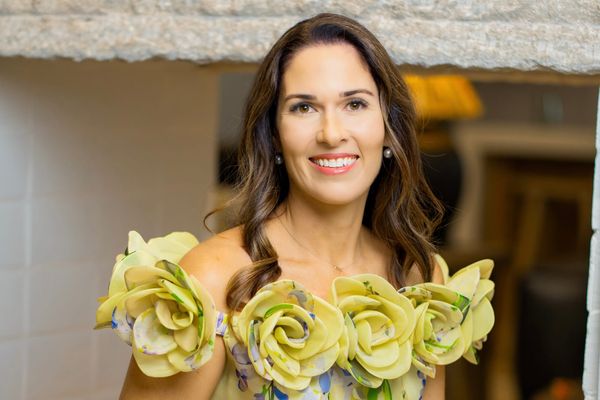
I take my own photographs, as well as use professional photography from previous business branding sessions, and use AI to help place text over them for quotes and other content. I don't want the technology changing my appearance or creating an artificial version of me when the original photograph already tells the story.
There is value in allowing people to see the person behind the business. Familiarity builds recognition, and consistency helps people understand what they can expect from you. Over time, those things can contribute to trust.
In a world where it can be difficult to distinguish a genuine business opportunity from a misleading one, authenticity matters. People want to understand who they are dealing with, what you stand for and whether your message feels consistent with the person behind it. Your personal brand can help bridge that gap.
A beautiful image may attract attention, but it is the relationship between what people see, what you say and how you show up that gives a personal brand its substance.
Before asking AI to create something for your business, get clear on your own visual identity. Know your colours, fonts, photography style and the feeling you want people to associate with your work. Give the technology a framework to follow rather than allowing it to invent one for you.
And take the time to look beyond the first result. Research your market, pay attention to what other brands are doing and make deliberate choices about how you want to differentiate yourself. Your brand should be recognisable without needing to follow every trend, or any trend for that matter.
The most useful work happens before the prompt
There is another side to authenticity that has very little to do with marketing. You cannot communicate who you are with clarity if you haven't spent time getting to know yourself.
I didn't create my new life through imagination alone. I had to learn more about the person I was becoming, including the things I liked, the things I no longer wanted and the choices that made my days feel better.
I learned how I prefer to exercise, which sports I enjoy playing and how I learn most effectively. I paid attention to the foods that worked well for my body and those that didn't. I became more aware of the people, places and situations that energised me, as well as the ones that left me feeling depleted.
Even the clothes I wear became part of that process. I started paying attention to the materials, colours and shapes I felt most comfortable in, rather than buying things simply because they were fashionable.
These might seem like small details, but together they influence how we experience our lives.
Personal development is often discussed in terms of confidence, mindset and ambition. For me, it also involves becoming more familiar with my own preferences, recognising my patterns and making decisions that reflect what I genuinely value.
That knowledge changes the way you build a business, too.
When you understand how you work best, what you want your days to look and feel like and what matters to you beyond revenue, you can make more considered decisions about the opportunities you pursue and the systems you create.
AI can help organise that information. It can suggest routines, compare options and help you plan around the practical realities of work, health and motherhood. But the information becomes useful because you have taken the time to understand yourself first.
Without that foundation, it is easy to ask AI how to build a successful business and receive a perfectly reasonable answer that leads you towards somebody else's definition of success.
The technology can offer a framework. You still need to decide whether the framework belongs in your life.
More time for the life you actually want
One of the ways I've found AI particularly useful is in reducing the small decisions that consume time and attention.
As a solo mum running an online business, my days have their own practical demands. There are school drop-offs and pick-ups, meetings, work to complete, errands to run and the ordinary responsibilities of keeping a household moving. I don't need every part of my life to become another project requiring hours of research.
I have used AI to organise seasonal wardrobe capsules around the way I actually live. My clothes need to work for Zoom meetings, school runs, working from home and running errands. Having a considered selection of pieces that suit those situations means fewer decisions in the morning and less time wondering what to wear.
Recently, I needed a black headpiece for race day.
I could have spent a day moving from one shop to another, hoping to find something that suited my style. Instead, I used AI to help locate a suitable option in my town. The following morning, I visited a boutique I hadn't even known existed, and there it was on the shelf. It was exactly right.
That small experience illustrates something I appreciate about technology when it is used well. It can widen your options, connect you with places you didn't know about and remove unnecessary effort from an otherwise ordinary task.
The benefit wasn't the headpiece itself. It was finding what I wanted without spending half a day searching for it. You can use technology to do more, or you can use it to make room for more of your life. For me, the latter is far more compelling.
Let the data inform you, not dictate your decisions
AI has also become useful in analysing my marketing performance.
I can download weekly, monthly and annual data and use AI to help identify patterns, assess what is working, examine where performance could improve and determine which activities may deserve more attention.
For an online business owner, this can be incredibly valuable. Rather than relying entirely on intuition, you can look at the numbers alongside your experience and make more informed decisions about where to direct your time and marketing budget. But the numbers still need interpretation. And intuition still plays a part in how you navigate the information.
AI can misunderstand a question, draw a conclusion from incomplete information or overlook a detail that changes the meaning of the results. It can confidently take you down a rabbit hole that consumes hours without bringing you any closer to a useful decision.
I've learned that I need to be clear about what I want to understand before I begin. Ask a specific question. Examine the answer. Check the underlying figures. Refine the analysis where necessary, then return to the work. You don't need to follow every possible line of inquiry simply because the technology can generate one.
The same principle applies to the recommendations it makes. A suggestion is not automatically the right decision for your business. It needs to be considered alongside your objectives, your audience, your resources and the experience you have gained from doing the work yourself.
AI can help you see patterns. It cannot take responsibility for the decisions you make from them. That responsibility remains part of your leadership.
The more context and direction you provide, the better you can guide an AI tool towards the language, style and results you want. But it still requires your judgement to ensure the output reflects your thinking and serves your purpose.
Authenticity is a practice, not an aesthetic
As AI becomes more capable, I suspect the distinction between a brand that looks polished and a brand that feels genuine will become increasingly important.
We can already create professional-looking images, articulate copy and carefully constructed online identities with relatively little effort. Those capabilities are useful, but they also mean that appearance alone tells us less about the person behind a business.
Authenticity has to come from somewhere deeper.
Most women I speak to about my business appreciate that my marketing reveals a real person with a real story that resonates. They can see something of themselves in my experiences, understand what matters to me and form their own impression of the person behind the brand.
That connection is difficult to manufacture through polished imagery or perfectly structured copy alone.
Authenticity comes from knowing what you believe, understanding why you do what you do and being willing to communicate from that position, even when a more fashionable message might attract greater attention. It comes from developing the confidence to make decisions without outsourcing every uncertainty to a tool.
It also comes from recognising that you are allowed to change. Your ideas may evolve as you gain experience. Your priorities may shift as your children grow, your business develops or you discover a different way of living that suits you better.
The more personal growth and transformation you go through, the more your identity shifts. What mattered to you five years ago may not carry the same weight today. Your understanding of success may change, your relationships may evolve and your ambitions may become more aligned with the person you have become.
An authentic personal brand doesn't require you to remain the same person forever. It asks you to remain connected to yourself as you grow.
This is why I see personal development and technology as complementary rather than competing forces. The more you understand yourself, the more intelligently you can use the tools available to you. You become better equipped to distinguish between a useful suggestion and a direction that doesn't fit.
You can use AI to strengthen your communication without surrendering your voice. You can use it to refine your marketing without allowing the data to replace your judgement. You can use it to organise your life without letting efficiency become the only measure of a good day.
And you can build an online business that benefits from technological progress while remaining grounded in your own values. For me, that is what it means to build a life with intention.
I want to keep learning, remain open to new possibilities and be willing to adapt as the world changes. I also want to preserve the parts of being human that give the work meaning: curiosity, playfulness, relationships, personal experience and the freedom to think for myself.
AI can expand the possibilities available to us. It can help us communicate, create and connect in ways that once required far more time and resources. But it is still our responsibility to decide what we want those possibilities to make room for.
I don't want technology to become another voice telling me how to live, what success should look like or who I need to become to deserve it. I want it to help me create more space for the life I have chosen.
That is the difference between allowing AI to define your world and allowing it to help you expand it. And in the process of building a business, a personal brand and a life that feels like your own, I believe your authenticity is worth protecting.
xx
Subscribe to The Postcard Life for more reflections on emotional wealth, intentional living, leadership and building a business around the life you actually want.